

Professor Kyung-won Kim’s Research Team at Incheon National University Awarded First Prize in the Competitive Category at the 2025 Fall Conference of the Korean Institute of Management Science for “Explainable AI-Based Policies to Promote Lifelong Learning Participation”
- 글번호
- 415932
- 작성일
- 2025-12-03
- 수정일
- 2025-12-03
- 작성자
- 홍보과 (032-835-9490)
- 조회수
- 126
.jpg)

Professor Kyung-won Kim’s research team receives award at the Korean Institute of Management Science Fall Conference
Amid digital transformation and an aging society, presenting a new policy direction for social inclusion and reducing learning gaps through a “lifelong learning participation prediction model” that combines machine learning and explainable artificial intelligence (XAI)
Professor Kyung-won Kim of Incheon National University, along with research team members Eun-ji Cho (Department of Business Administration), Hyun-seo Lee and Hyo-jung Yoo (Department of Trade), received the First Prize at the 2025 Fall Conference of the Korean Institute of Management Science (KORMS), held on November 1 at Yonsei University’s Sinchon Campus, for the study titled “Explainable AI-Based Policies to Promote Lifelong Learning Participation: Implications in Digital Transformation and an Aging Society.”
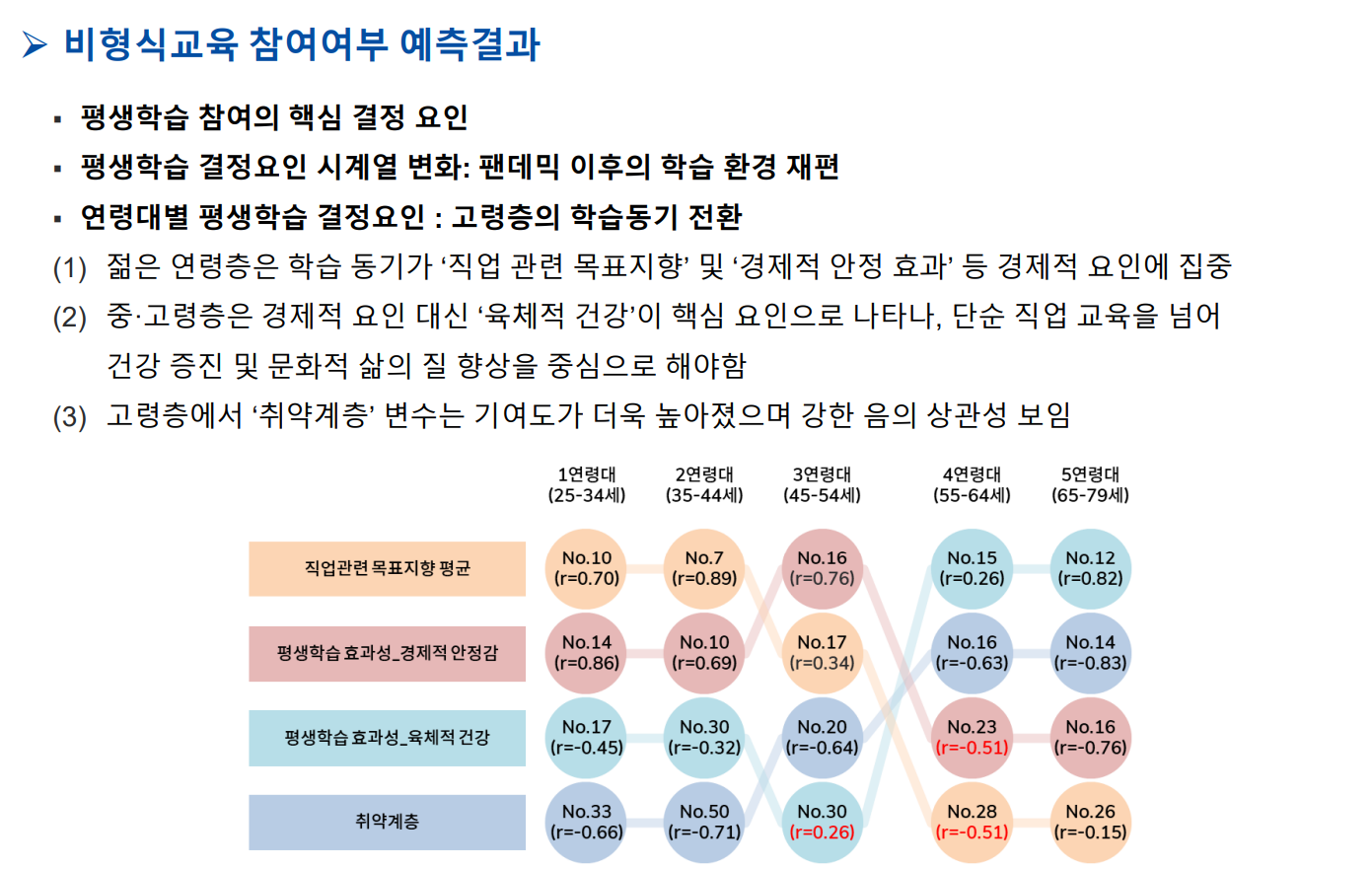
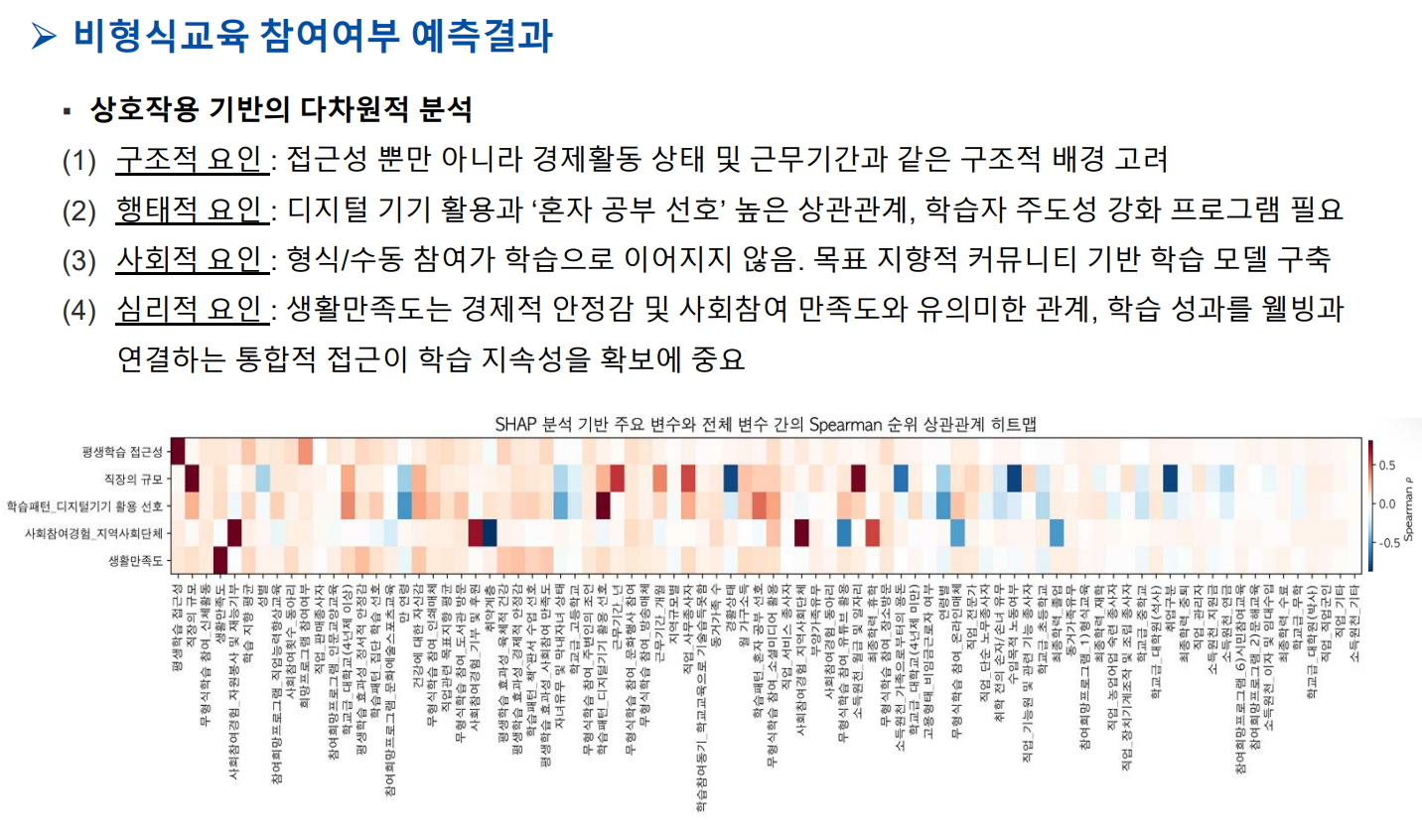
This study was highly praised for presenting a new analytical and policy framework to enhance national lifelong learning participation amid structural societal shifts caused by digital transformation and population aging. The research team went beyond traditional factor analysis by combining machine-learning–based prediction models with explainable artificial intelligence (XAI), quantitatively and visually interpreting the interactions and directional contributions among determinants of participation. In particular, by applying the SHAP (Shapley Additive Explanations) method, the study enabled not only identification of “what matters” but also “how it matters,” securing distinctiveness by providing a multidimensional understanding of the complex influence of various factors—such as digital divide, workplace size, social participation experience, and life satisfaction—on lifelong learning participation.
According to the findings, (1) vulnerable groups and individuals with low educational attainment are discouraged from participating due to economic and informational constraints, whereas (2) digital device proficiency and preference for self-directed learning significantly promote participation. Furthermore, the study revealed that social participation experiences—such as volunteering, donating, and club activities—serve as positive factors that strengthen learning motivation, whereas mere participation in fellowship-based local groups does not lead to learning engagement.
Based on these findings, the research team proposed four strategic directions: ▲ establishment of a data-driven personalized learner diagnosis and support system ▲ development of community-centered lifelong learning hubs ▲ design of flexible modular curricula ▲ establishment of governance collaboration among universities, corporations, and NGOs. These strategies are expected to serve as a foundation for transforming lifelong learning from a simple educational policy into a national strategic resource that fosters social inclusion and sustainability.
Professor Kim stated, “This study was an attempt to expand AI technology as a new design tool for education policy. I am very pleased that we were able to show that AI can function not only as a means to improve industrial productivity but also as a social infrastructure that reduces digital and social disparities, enabling all citizens to become active learners throughout life.”
He added, “In a society where digital transformation is rapidly accelerating, educational gaps can deepen further. We hope this research contributes to strengthening social inclusion and guaranteeing learning rights for older adults and vulnerable populations through data-driven, personalized lifelong learning policies.”
Through this award, Professor Kim’s research team introduced a new paradigm of AI-based analysis and policy design in the field of lifelong learning, offering not only academic contributions but also direct implications for policy and practice. This research is expected to become an important foundation for addressing learning disparities in an aging society and the digital era.